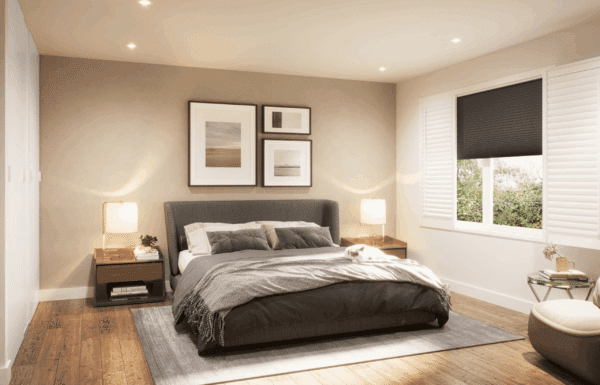
Many homeowners view blackout blinds simply as a tool for Saturday morning lie-ins or nurseries. However, as specialists in window efficiency, we see them as a powerful, year-round climate control solution. When you select the correct fabric and lining, a simple blind transforms into a highly effective thermal barrier.
Blackout blinds perform a host of functions over and above light blocking. We find this dual utility often surprises our clients. They actively manage your home’s temperature, rejecting intense solar heat in summer and trapping valuable warmth in winter.
Standard fabrics allow sunlight to pass through, heating the air inside your room, a process known as solar gain. Light-impervious blinds prevent this thermal load using specialized backings.
Most effective room darkening blinds feature a reflective backing, which is typically a white or metallic-coated PVC layer facing the glass. This layer mirrors infrared radiation (heat). Instead of absorbing the sun’s energy and radiating it into your bedroom, the lining reflects it out through the glass. This process significantly lowers the room’s ambient temperature without drawing mechanical power.
For rooms with direct South-facing sun, this reflective capability makes blackout blinds a major asset for keeping your home cool and comfortable.
In winter, your windows are the primary escape route for your home’s heat. Glass insulates poorly, allowing warmth to transfer rapidly to the cold outside air via conduction.
Blackout blinds combat this heat loss by creating a “dead air” space. When you lower a thick, high-quality blind, you trap a layer of air between the fabric and the cold glass. This stagnant air acts as an insulating buffer, slowing down thermal transfer. The reduction in air movement also mitigates convection; warm air currents transfer less heat toward the windowpane.
To maximise this effect, we recommend fabrics with a dense weave or a thermal lining. The thicker the material, the better it insulates. By simply closing your blinds at dusk, you significantly reduce the demand on your central heating.
To truly maximise insulation performance with a blind, the cellular or honeycomb blind structure is unparalleled. A standard roller blind traps a single air layer; the cellular design, however, presents a unique, internal hexagonal cross-section. This structure creates multiple, distinct air pockets (cells) that prevent air circulation and heat convection more effectively. This advanced design significantly improves your window’s overall U-Value (the professional measure of heat loss) by up to 40% when closed, resulting in a verifiable reduction in energy bills. This makes the cellular blind a major consideration for anyone serious about year-round thermal efficiency and looking for a made-to-measure solution.
Beyond saving money on energy, blackout blinds function as a core conservation tool for your home’s furnishings. Powerful Ultraviolet (UV) radiation streams through a window, silently causing interior fading and degradation.
UV-A and UV-B Protection: Though standard window glass blocks most high-energy UV-B rays (those that cause sunburn), the more pervasive UV-A rays, which cause fabric and wood fading, penetrate deep into your home. The opaque, PVC or metallic backing in high-quality blackout blinds performs as a near-total filtration barrier. By simply pulling down the blind during peak sun hours (10 am to 4 pm), you protect:
When browsing for blackout blinds, you will encounter two main categories: “blackout fabrics” and “blackout linings.” Long-term performance and aesthetic integrity rely on understanding the difference.
The best material for your blackout blinds depends entirely on the environment and the function of the room. A standardised approach compromises longevity and performance; a costly mistake good installers help you avoid.
Even the most advanced thermal fabric fails if the installation is poor. A poorly seated blind or large side gaps allow air to circulate freely, breaking the insulating seal. This gap forms a thermal bridge, a route for heat to bypass the insulation. This gap presents the most common failure point for both light and temperature control.
For maximum thermal efficiency, we recommend blackout blinds that sit close to the frame. Systems like “Perfect Fit” frames or cassette roller blinds reduce the peripheral gaps (known in the trade as light bleed); they create a tighter seal. This precision fitting ensures that the air pocket remains stable, maximising both heat retention and light exclusion.
Choosing the right window dressing requires a major decision based on function, not just style. High-quality blackout blinds with the correct reflective or thermal lining give you a passive climate control system that works for you every day of the year.
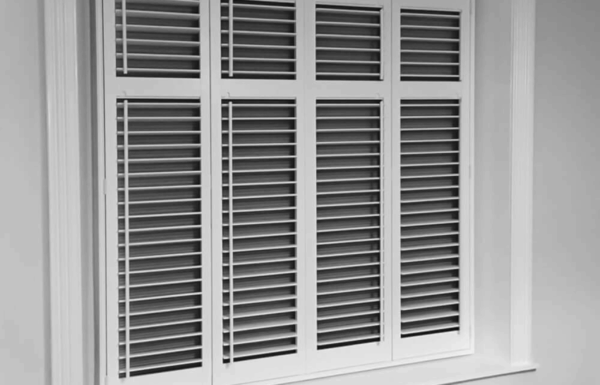
A made-to-measure blind provides a simple, effective solution for light and temperature management. For clients requiring total darkness and acoustic silence, we also recommend considering our Integrated Blackout Shutter System, which combines a shutter and blind for total environmental control.
Do not allow your windows to compromise your comfort. Book a consultation with us to discuss the specific blinds that best suit your needs.